View Providers

An Innovative Pacemaker Design for Maintaining Heart Rate and Rhythm
A pacemaker is an implantable device that sends electrical signals to your heart. The goal is to normalize heart rate and rhythm in people with arrhythmias—or abnormal heartbeats. Arrhythmias occur when problems develop with your heart’s electrical system. Normally, electrical signals coordinate the chambers of your heart to pump blood. When the system isn’t working right, arrhythmias can develop and prevent the heart from pumping blood properly. Pacemakers help manage arrhythmias, such as bradycardia (low heart rate), and restore normal blood flow. A leadless pacemaker is a newer type of pacemaker suitable for people with a certain type of heart disease.
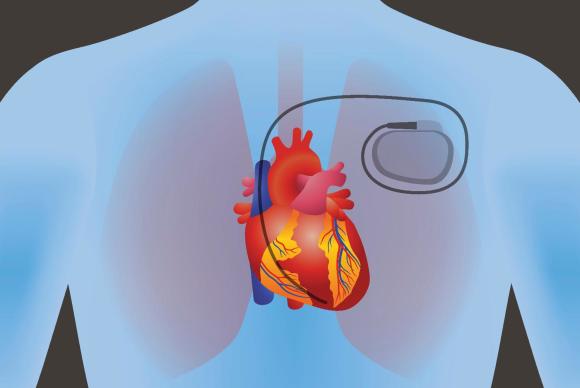
1. Leadless pacemakers have no wires.
Traditional pacemakers have two main parts—wires and a pulse generator. The wires connect to your heart and constantly monitor its rhythm. They send this information to the pulse generator. The pulse generator is a small battery-operated computer. It recognizes and corrects abnormal rhythms by sending electrical pulses back through the wires to the heart. A leadless pacemaker does not require wires. It is a self-contained device that sits inside one of the heart’s chambers.
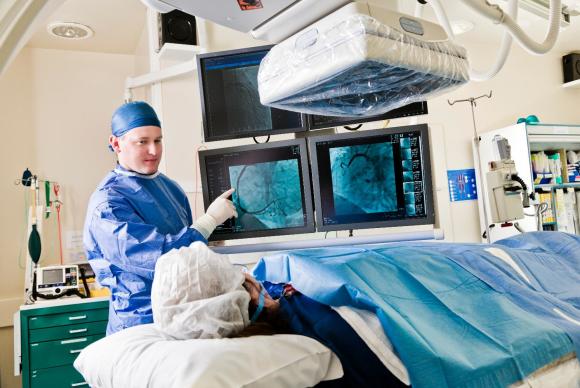
2. Leadless pacemaker placement is a catheter-based procedure.
Traditional devices require a two-step pacemaker procedure. The first part uses a catheter to thread the wires up through a blood vessel into the heart. The second part cuts into the chest wall or abdomen to create a surgical pocket for the pulse generator. Then the surgeon connects them. Doctors can complete a leadless pacemaker placement with just a catheter procedure. Using a catheter, they feed the device into a heart chamber and embed it in place. There is no need to place anything under the skin of your chest or abdomen.

3. Leadless pacemakers eliminate the two main sources of pacemaker complications.
Traditional pacemaker wires and the surgical pocket for the pulse generator cause complications in about 10% of patients. The wires, or leads, can become dislodged or cause problems, such as perforating the heart muscle. The surgical pocket can also have complications, such as infection. This is a risk each time the generator needs replacing. These are not issues with leadless pacemakers. With a leadless pacemaker, there is also no lump under the skin or discomfort from the pulse generator.

4. Leadless pacemakers have fewer restrictions.
After traditional pacemaker placement, there are restrictions on upper body activity while you heal. Sudden arm movements or heavy loads can cause problems until your body heals around the device. Leadless pacemakers do not have such restrictions because there are no wires or surgical pocket. Leadless pacemakers are also MRI conditional—meaning they are safe for MRI machines with some limitations. Older pacemakers are generally not safe for use with MRI. If you need an MRI, be sure everyone knows you have pacemaker and which kind of pacemaker you have.

5. Leadless pacemakers are tiny.
The two leadless pacemakers with current FDA (Food and Drug Administration) approval are very small devices. Micra by Medtronic is about an inch long and Nanostim by Abbott is about 1.5 inches. They have a long, thin capsule-like shape. Traditional pacemakers (chest-implanted pulse generators) are about the size of a matchbox. Despite their small size, leadless pacemakers pack power to last about 10 years. This is comparable to traditional pacemaker batteries. A traditional pacemaker can last 5 to 15 years with an average lifespan of 6 to 7 years.

6. Leadless pacemakers are not right for everyone.
Leadless pacemaker technology is exciting, but it isn’t right for everyone. Leadless pacemakers are not right for people with certain other cardiac devices. This includes an implantable cardiac defibrillator (ICD) and a vena cava filter. Right now, it is only available for people who need single-chamber pacing. However, researchers are already looking at leadless dual-chamber and multi-chamber pacing. These approaches may be available in the future. Your doctor can help you better understand if you are a candidate for a leadless pacemaker.