What It Is
What is cardiac ablation?
Cardiac ablation is a minimally invasive procedure that treats heart arrhythmias. Arrhythmias happen when the heart’s electrical signal causes it to beat too fast or irregularly. Arrhythmias prevent the heart from pumping enough blood to the body. They can cause serious problems, such as blood clots. Cardiac ablation uses energy to destroy abnormal heart tissue that is interfering with the heart’s electrical signal. This restores a normal heart rhythm.
Cardiac ablation uses one of the following types of energy:
-
Cryoablation (extreme cold)
-
Laser
-
Radiofrequency (heat)
Cardiac ablation is only one method used to treat arrhythmias. Discuss all of your treatment options with your doctor to understand which options are right for you.
Why It's Done
Why is cardiac ablation performed?
Your doctor may recommend cardiac ablation to treat certain abnormal heart rhythms. It is often necessary for heart arrhythmias that happen often or last a long time. Doctors also use cardiac ablation when medications are not effective or cause serious side effects.
Cardiac ablation can treat the following arrhythmias:
-
Atrial fibrillation, which occurs when electrical signals move too fast and erratically through the heart’s upper chambers (atria). This causes the atria to quiver rapidly instead of pumping effectively.
-
Atrial flutter, which occurs when electrical signals move regularly, but too fast, through the atria. This causes the atria to beat too rapidly.
-
Supraventricular tachycardia, which occurs when abnormal electrical signals from atria cause an extremely fast heartbeat. The rapid heartbeat can become serious, even life threatening if not treated quickly.
Who to See
Who performs cardiac ablation?
Electrophysiologists perform cardiac ablation. An electrophysiologist is a specialized cardiologist. A cardiologist is a doctor who focuses on diagnosing and treating heart diseases. An electrophysiologist has extra training in diagnosing and treating heart arrhythmias.
How It's Done
How is cardiac ablation performed?
Your cardiac ablation will be performed in an electrophysiology (EP) lab or a cardiac catheterization (cath) lab in a hospital or outpatient setting. It takes several hours and generally includes these steps:
-
You will dress in a patient gown and lie on a procedure table.
-
Your team will insert an IV to provide fluids, medications, and a contrast agent.
-
Your team attaches devices to monitor your heart rate and blood pressure.
-
Your team will give you sedative medications through the IV to help you relax.
-
Your doctor will determine the location to insert the catheters (small tubes). This can be the groin, neck or forearm. The team will shave, clean and numb the area with a local anesthetic.
-
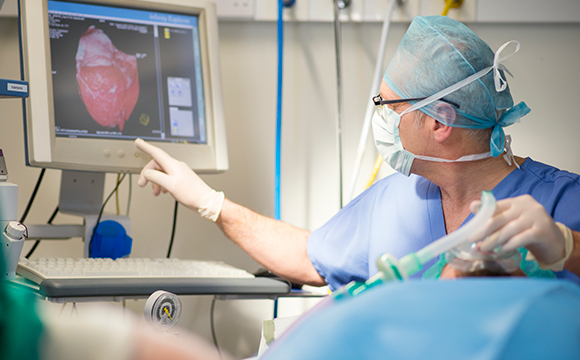
Your doctor will make an incision and insert the catheters through the incision. Your doctor will inject a contrast agent (dye) through one catheter. The dye makes the blood vessel appear as an image on a video screen that your doctor sees during the procedure. Your doctor will use this and other catheter techniques to guide the catheter to the heart tissue that needs treatment.
-
Your doctor will send energy through the catheter to destroy the abnormal tissue that is triggering your arrhythmia. The energy may be in the form of a laser, radiofrequency (heat), or cryoablation (extreme cold).
-
Your doctor will remove your catheter and sew up the incision.
Will I feel pain?
Your comfort and relaxation is important to you and your care team. The ablation with energy is painless, but some parts of the procedure can be mildly uncomfortable for a brief time. You may feel a pinch or pin prick pain during the IV placement and brief stinging when the catheter site is numbed. You may also have some pressure at the catheter site during catheter insertion. There may be a brief warming or flushing sensation when your doctor injects the contrast.
You will have enough sedative medications to keep you comfortable and relaxed. Tell your doctor or care team if you have pain, are anxious, or are uncomfortable.
Risks and Complications
What are the risks and potential complications of cardiac ablation?
Complications of cardiac ablation are uncommon, but any medical procedure involves risks and potential complications. Complications may become serious in rare cases. Complications can develop during the procedure or your recovery. Risks and potential complications include:/p>
-
Adverse reaction or problems related to sedation or contrast agents, such as an allergic reaction and problems with breathing
-
Bleeding
-
Blood clots that can cause a heart attack, stroke or death
-
Damage to the heart, blood vessel, or lung
-
Heart block requiring permanent pacemaker placement
-
Infection
Reducing your risk of complications
You can reduce the risk of certain complications by:
-
Following activity, dietary and lifestyle restrictions and recommendations before the procedure and during recovery. This may include cardiac rehabilitation.
-
Informing your doctor if you are nursing or there is any possibility of pregnancy
-
Notifying your doctor immediately of any concerns, such as bleeding, fever, increase in pain, or wound redness, swelling or drainage
-
Taking your medications exactly as directed
-
Telling all members of your care team if you have any allergies
-
Telling your doctor if you take sildenafil (Viagra)
How to Prepare
How do I prepare for my cardiac ablation?
You are an important member of your own healthcare team. The steps you take before your cardiac ablation can improve your comfort and outcome. You can prepare for your procedure by:
-
Answering all questions about your medical history and medications. This includes prescriptions, over-the-counter drugs, herbal treatments, and vitamins. It is a good idea to carry a current list of your medical conditions, medications, and allergies at all times.
-
Arranging for a ride home after your cardiac ablation
-
Following dietary guidelines as directed
-
Following instructions about eating and drinking. This generally includes not eating or drinking for eight to 12 hours before your procedure. Your doctor will give you specific instructions about eating and drinking.
-
Getting testing before your procedure as directed. Testing will vary depending on your age, health, and specific procedure. Testing may include a chest X-ray, EKG (electrocardiogram), blood tests, and other tests as needed. Leaving jewelry, metal objects, credit cards, and other valuables at home
-
Losing excess weight before the surgery through a healthy diet and exercise plan
-
Stopping smoking as soon as possible. Even quitting for just a few days can be beneficial and can help the healing process.
-
Taking or stopping medications exactly as directed. This may include not taking aspirin, ibuprofen (Advil, Motrin), and blood thinners. Your doctor will give you instructions for taking your medications and supplements.
Questions to ask your doctor
Preparing for a cardiac ablation can be stressful. It is common for patients to forget some of their questions during a doctor’s office visit. You may also think of other questions after your appointment. Contact your doctor with concerns and questions before surgery and between appointments.
It is also a good idea to bring a list of questions to your appointments. Questions can include:
-
Why do I need cardiac ablation? Are there any other options for treating my condition?
-
How long will the procedure take? When can I go home?
-
What restrictions will I have after the procedure? When can I return to work and other activities?
-
What kind of assistance will I need at home?
-
Will I still need to take medication to control my arrhythmia after the procedure? How should I take my other medications?
-
How will you treat my pain?
-
When should I follow up with you?
-
How should I contact you? Ask for numbers to call during and after regular hours.
What to Expect
What can I expect after my cardiac ablation?
Knowing what to expect after a cardiac ablation can help you get back to your everyday life as soon as possible.
How will I feel after cardiac ablation?
You may have minor tenderness and bruising at the catheter incision site. Your doctor will treat your pain so you are comfortable and can get the rest you need. You should not feel severe pain. Call your doctor if you have pain or increasing discomfort at the incision site because it may be a sign of a complication.
You will be a little drowsy from the sedative medication and should take it easy for the first day or two after you go home. Many people return to light activates in 24 hours, but you should avoid stressing the incision. This includes not straining to have a bowel movement, avoiding heavy lifting, and not participating in strenuous activities for at least three days or as directed by your doctor.
You will need to keep the incision clean and dry. Your doctor may recommend taking aspirin for several weeks to prevent blood clots. Follow your doctor’s instructions for medications, diet, activities, and caring for your incision site.
When can I go home?
You will recover briefly in a recovery room after cardiac ablation. You care team will monitor your vital signs and other critical functions while you are there. The catheter sheath usually stays in the leg for several hours after the procedure. You will lie flat during this time and should keep your leg straight for six to eight hours after sheath removal.
Many people go home the same day. You will need a ride home because you will still be drowsy from the sedative medications. You cannot drive for at least 24 hours and someone should stay with you for at least the first day.
Sometimes an overnight hospital stay is necessary to monitor heart rhythm and give treatments. Your doctor will decide if you can go home the same day or if you need to stay in the hospital based on certain factors. These include the type of cardiac arrhythmia, your general health, your medical history, your age, and other factors.
When should I call my doctor?
It is important to keep your follow-up appointments after cardiac ablation. Contact your doctor for questions and concerns between appointments. Call your doctor right away or seek immediate medical care if you have:
-
Bleeding
-
Breathing problems, such as shortness of breath, difficulty breathing, labored breathing, or wheezing
-
Change in alertness, such as passing out, unresponsiveness, or confusion
-
Chest pain, racing heart, chest tightness, chest pressure, or palpitations
-
Dizziness
-
Fever
-
Numbness, bluish color, or a feeling of coolness in foot or leg that had the catheter
-
Pain that is not controlled by your medication
-
Unexpected drainage, pus, redness or swelling of your incision
How might cardiac ablation affect my everyday life?
Cardiac ablation is successful for most people. Most people can lead an active life without the worry of a cardiac arrhythmia. Many people no longer need medication or can take a lower dose of medication. Talk to your doctor about what you can expect from cardiac ablation.