View Providers
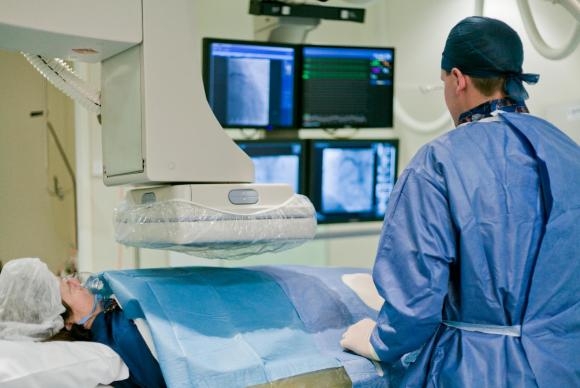
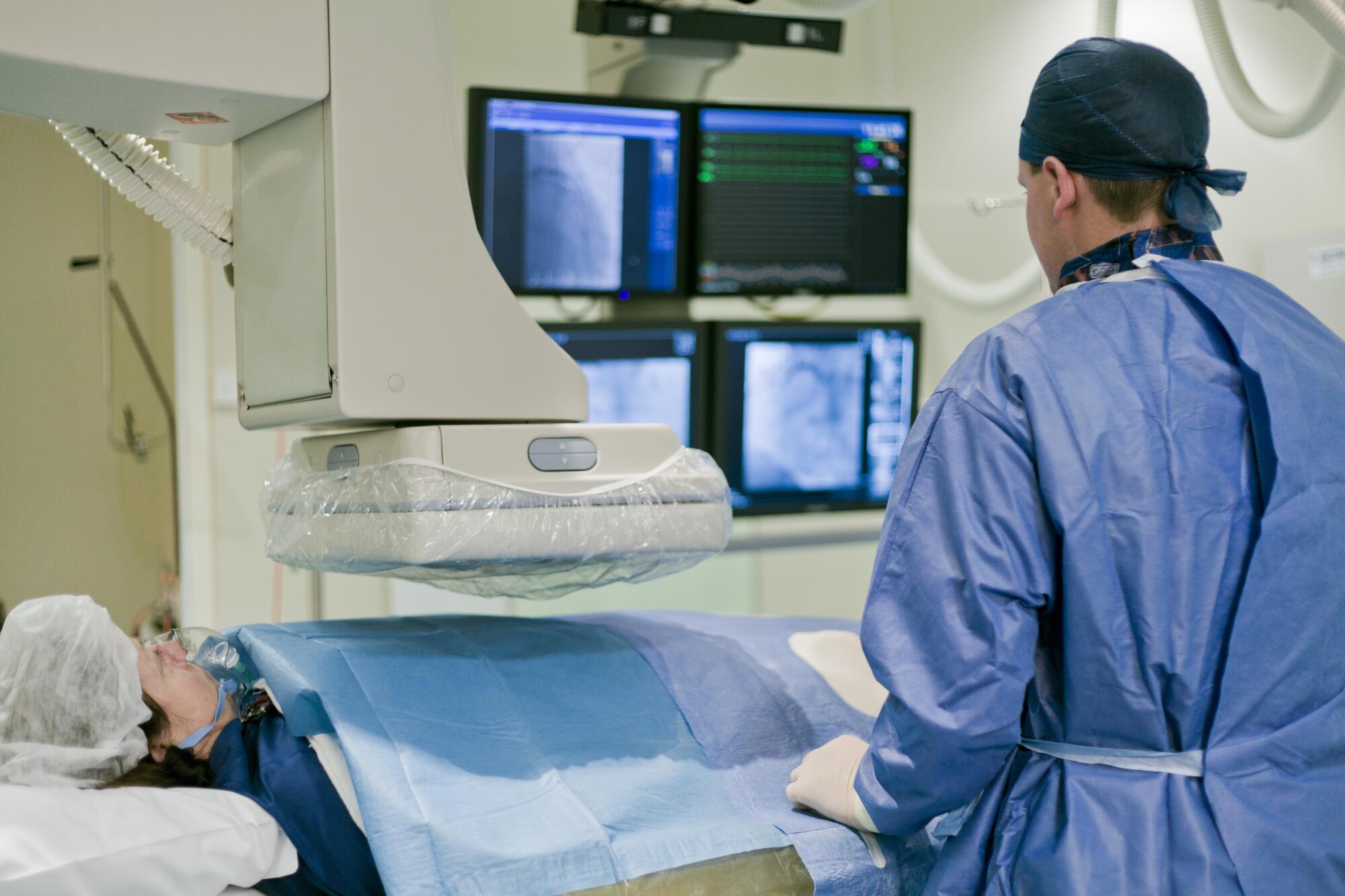
Cardiac catheterization is a minimally invasive procedure doctors use to diagnose and treat certain heart conditions, such as coronary artery disease. Cardiac catheterization involves guiding a long, thin tube (catheter) to your heart by way of a blood vessel in your neck, groin or arm. Cardiac catheterization has revolutionized heart medicine. It’s not only a powerful diagnostic tool, but it also allows doctors to treat some heart problems without open heart surgery. Here are five treatments and tests commonly performed during cardiac catheterization.
1. Coronary Angiography
Coronary angiography is an X-ray imaging test with a contrast dye. Doctors use cardiac catheterization to deliver the dye to the coronary arteries. A radiologist takes X-ray pictures as the dye flows through the coronary arteries. The dye makes the arteries clearly visible in the images. Coronary angiography shows where the blocks are and helps the doctor guide treatment. Ultrasound imaging tests may also be used with cardiac catheterization to view blocks in the coronary arteries.
2. Coronary Angioplasty
Coronary angioplasty is often performed with cardiac catheterization to treat the symptoms of coronary artery disease — commonly known as heart disease. With heart disease, a fatty substance called plaque builds up inside the coronary arteries. This can lead to a severe block or blood clot and is the biggest risk factor for heart attack. During angioplasty, a doctor feeds a catheter with a balloon tip to the block. The balloon is inflated several times to push the plaque against the artery wall and clear the block. The doctor will often place a stent, or mesh tube, to keep the vessel open.
3. Blood Clot Removal
Heart disease can also lead to a blood clot in a coronary artery. This is because pieces of hardened plaque can break off, forming an embolus and completely blocking the flow of blood through an artery. Reduced blood flow to the heart is what leads to chest pain (angina) and potentially a heart attack. Your doctor can treat the blood clot during cardiac catheterization. Once the catheter is in place, the doctor delivers clot-dissolving medication into the artery via the catheter.
4. Heart Defect or Heart Valve Repair
Birth defects, infections, and other conditions can damage the heart valves and cause other heart problems, such as cardiomyopathy. Heart valves control the flow of blood through the heart chambers and throughout the body. Doctors can sometimes repair or replace diseased heart valves during cardiac catheterization at select medical centers. An atrial septal defect, a hole between the upper chambers of the heart, is a common heart defect present at birth. Some atrial septal defects can be repaired with a catheter-based procedure at medical centers with advanced interventional cardiology units.
5. Heart Biopsy and Other Tests
Doctors use cardiac catheterization to perform a number of tests. A biopsy is a sample of heart muscle cells that doctors use to test for cancer and other heart conditions, such as inflammation or infection of the heart (myocarditis). They can also measure blood pressure and oxygen levels in the heart to evaluate how well the heart is functioning.