
View Providers
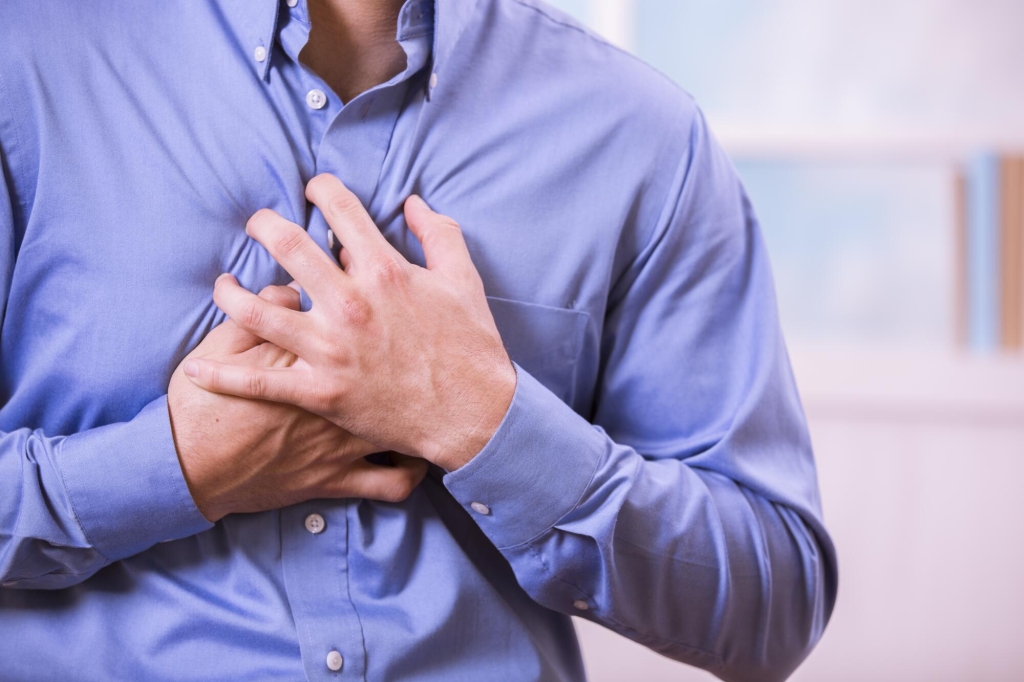
Many people tend to think of a "heart attack" as one type of event. In reality, there are different types of heart attacks. Although men and women may experience them very differently, heart attacks are a leading cause of death for both sexes. If you think you may be having a heart attack, you should seek treatment immediately.
STEMI Heart Attacks
STEMI stands for “ST-segment elevation myocardial infarction.” The “segment elevation” refers to a pattern that shows up on an electrocardiogram—or EKG—when recording the heart’s rhythm. “Myocardial infarction” is the medical term for a heart attack. A STEMI heart attack is the more serious form of heart attack. In a STEMI heart attack, a coronary artery is completely blocked and a large part of the heart muscle is unable to receive blood. This leads to heart muscle damage.
STEMI heart attacks require immediate treatment to restore blood flow through the artery. Doctors treat the blockage with drugs or an angioplasty—a catheter-based procedure to re-open the artery. Speed is essential, as 85% of the muscle damage takes place in the first hour of an attack. Doctors can then insert a stent, which props the artery open permanently.
Out of about 935,000 people in the United States who have a heart attack each year, some 250,000 will be STEMI heart attacks. The good news is that the number of STEMI heart attacks is declining, possibly because fewer people are smoking.
NSTEMI Heart Attacks
Non-ST-segment elevation myocardial infarction, or NSTEMI heart attack, is less serious than a STEMI. It causes less damage to the heart than a STEMI. There is no change in the pattern of heart activity recorded on an EKG. But a blood test will show the presence of a protein — troponin — that the body releases when the heart is injured. In NSTEMI heart attacks, most blockages are partial or temporary. Doctors treat NSTEMI heart attacks with medication. After checking the blockage, they may also perform an angioplasty or bypass surgery to open or circumvent the blocked artery.
Heart Attacks in Women
Though the overall rate of death from heart attack has been dropping, women have a higher chance of dying from one, compared to men. This may be because women don’t recognize the symptoms and it takes too long to get help. Rather than the crushing chest pain associated with heart attack in men, the symptoms in women may be different. Symptoms in women tend to include nausea, palpitations, indigestion, fatigue, and shortness of breath. There may be chest pain or a feeling of pressure in the shoulders, arms, upper back, neck or jaw. These symptoms usually get worse with exertion or stress. However, half of all women who have a heart attack have no pain.
“Silent” Heart Attacks
In almost half of heart attacks, no matter what the patient’s gender, there are no symptoms at all. Doctors usually find these “silent heart attacks” on an EKG during a routine physical. Because they can be a precursor to other, more serious heart attacks, your doctor can follow up to see if medication or other treatment is advisable.
Cardiac Arrest
Though people may use this term when thinking of a heart attack, cardiac arrest is different. During a heart attack, the heart continues to beat, but in cardiac arrest, the heart stops. A heart attack can cause cardiac arrest, or the heart may stop beating for another reason. Cardiac arrest is often fatal, and the odds of survival go down by about 10% for every minute that elapses until the person is resuscitated. Doctor will perform CPR and defibrillation, during which a shock is given to the heart to make it start beating again.
Immediate Treatment
Heart attacks can be hard to diagnose, but the most important thing to know about them is that they must be treated quickly. If you think you may be having a heart attack, call 911. The faster the treatment, the better the outcome. No matter what type of heart attack occurs, new approaches to recovery, such as cardiac rehabilitation programs, help people attain a full recovery and many more years of life.