View Providers
When you think about a massive heart attack, you probably imagine someone who suddenly clutches their chest and collapses. This is not always the scenario, even with a large heart attack. Although some heart attacks are more dramatic than others, a heart attack is always serious.Whether a heart attack is mild or severe, you can improve your odds of living the longest, healthiest life possible if you know what to do.
What causes heart attacks?
All heart attacks occur when circulation of blood to the heart is blocked. If the blockage is not rapidly opened, heart tissue will die from a lack of oxygen.
Most often, a heart attack, also called myocardial infarction (MI), is a result of coronary heart disease (CHD).Coronary heart disease is a narrowing of the coronary arteries, which bring blood into the heart muscle. Coronary heart disease is most often caused by atherosclerosis, a buildup of fatty plaque on the artery walls.
Narrowed coronary arteries reduce blood flow to the heart muscle and can cause chest pain (angina), especially during exercise or stress. In addition, blood clots form more easily in a narrowed artery damaged by fatty plaques. A blood clot can completely block blood flow, causing a heart attack and life-threatening heart damage. Angina is not a heart attack, but if it does not go away with rest or after taking nitroglycerin, it is a sign of a developing heart attack.
What is a mild heart attack?
A mild heart attack affects a relatively small portion of the heart muscle, or does not cause much permanent heart damage. This is because the blockage in a coronary artery occurs in a small artery that supplies a small portion of the heart muscle; does not completely block blood flow to the heart; or lasts briefly.
It is a common misconception that a mild heart attack is not serious. Even if the area of the heart affected is small, a heart attack can result in permanent heart damage and life-threatening problems that affect you for the rest of your life, including heart failure, an abnormal heart beat (arrhythmia), and a higher risk of a second heart attack.
What is a massive heart attack?
A massive heart attack affects a large portion of the heart muscle, or causes a large amount of heart damage. This can happen if the blockage in a coronary artery occurs in a large artery that supplies a large portion of the heart; completely blocks blood flow to the heart; or lasts for a long period of time.
A massive heart attack can result in collapse, cardiac arrest (when your heart stops beating), and rapid death or permanent heart damage. A massive heart attack can also lead to heart failure, arrhythmia, and a higher risk of a second heart attack.
What do I do if I have a heart attack?
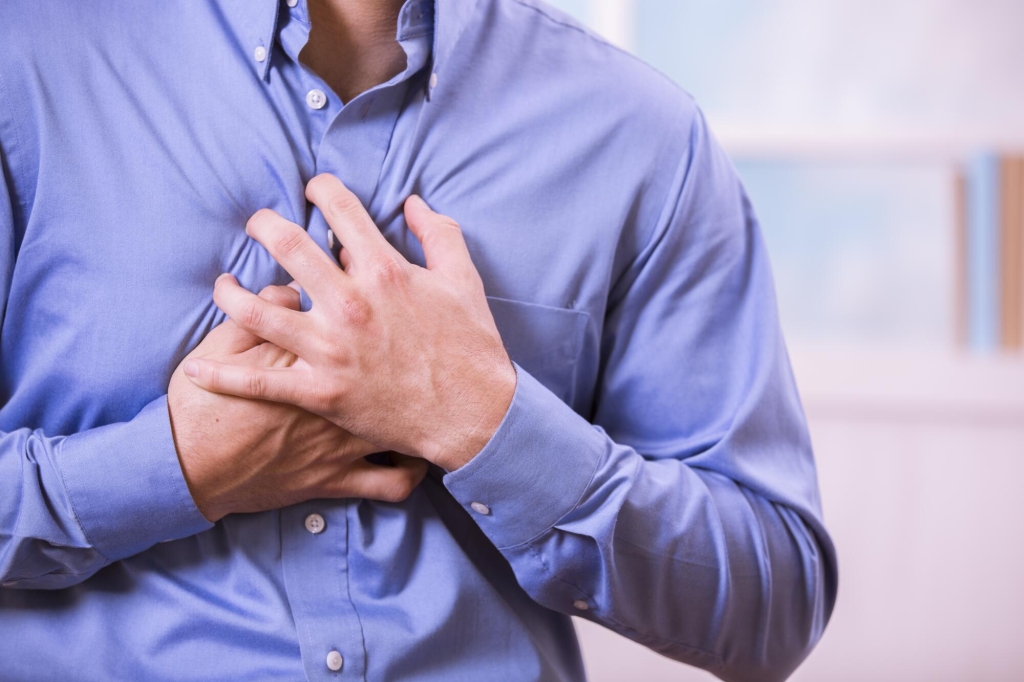
Chest pain with a heart attack can spread into the arms, neck, jaw or stomach. Another major heart attack symptom is shortness of breath, even without chest pain. Other symptoms include feeling nauseous, sweaty and dizzy.
If you experience heart attack symptoms, call 911 for the fastest medical help. While waiting for emergency personnel to arrive, remain as calm as possible and loosen tight clothing. The 911 operator may ask if you have aspirin available because it can help prevent a blood clot. The 911 operator will keep you on the phone until help arrives.